
WIZARDS · OFF DAY
AJ Dybantsa’s Next Step Is Bigger Than a 20-Point Game
His first three NBA appearances produced 57 points. The longer view is about decisions, useful movement and whether the defensive work becomes dependable.
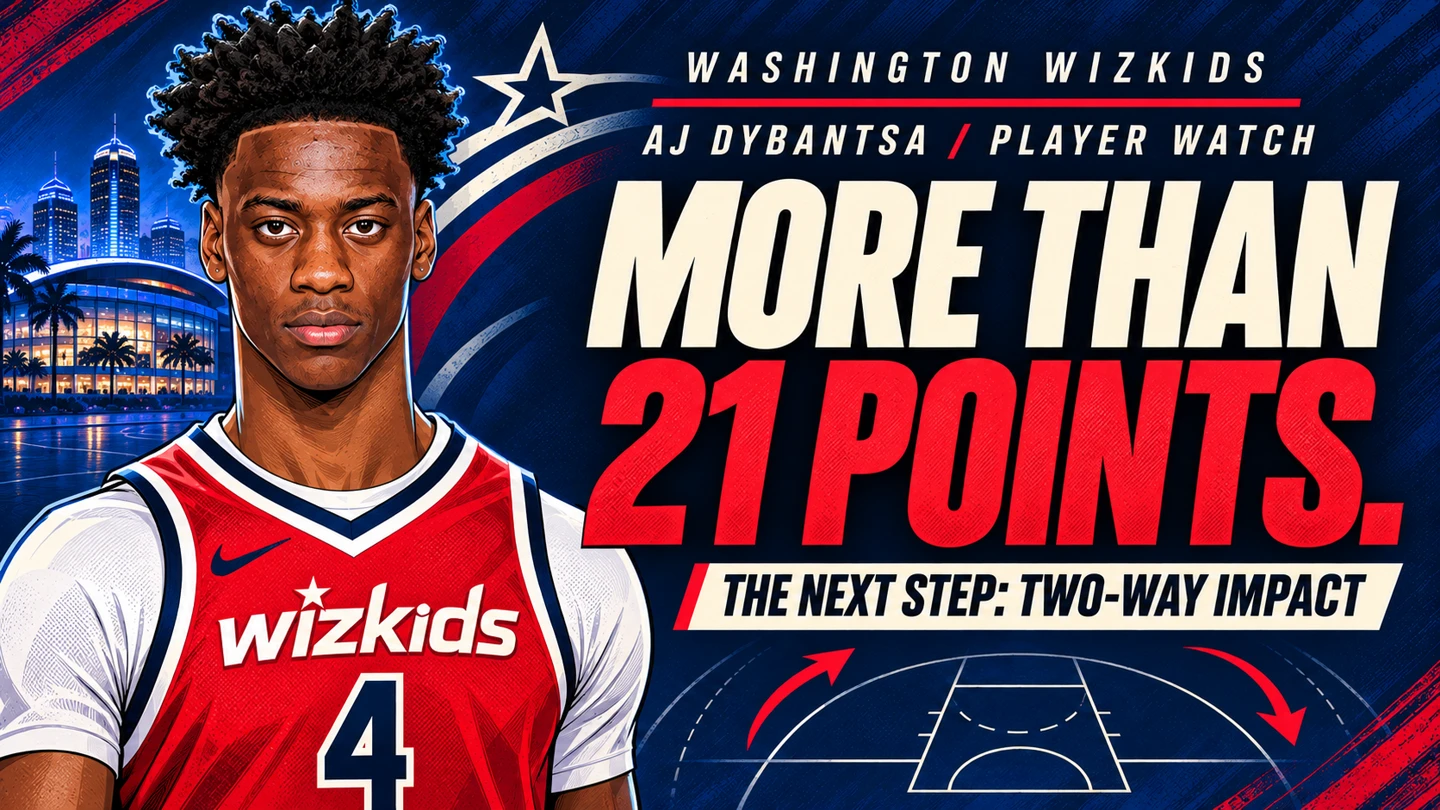
What makes a promising rookie useful when he is not taking the shot?
AJ Dybantsa’s first three NBA games have given Wizards fans plenty of scoring to discuss. The more durable question is how many ways he can help Washington when the defense takes away his first idea.
His first 20-point outing came in the Wizards’ 103–94 road win over Orlando on November 2. The official NBA gamebook lists 21 points, five rebounds, two assists and three steals in 33:24. He shot 7-for-17 and made all six free throws.
That is a useful starting point for a conversation about a young player. It is not enough evidence to decide what he will become.
THREE GAMES, THREE DIFFERENT CHECKPOINTS
The WizKids Stats Lab, using its BALLDONTLIE game-log feed through November 2, lists 19 points at Cleveland, 17 against Charlotte and 21 at Orlando. That is 57 across three appearances, or 19.0 per game.
Keep the sample size attached to the number. An average after three games describes the start. It does not tell us how AJ will respond after opponents have more information, how his role will change or which shots will remain available.
Our debut recap focused on the encouragement inside a loss. The Orlando recap gives us another checkpoint: contributing to a win without needing the entire offense to become a rookie showcase.
1. MAKE LIFE EASIER FOR THE CREATOR
Playing with Trae Young and Anthony Davis creates a useful challenge. A young scorer needs to be ready when an advantage reaches him and remain involved when the ball stays elsewhere.
Watch AJ’s timing. Does a cut arrive when the ball handler can see it? Is there a passing window after the defense commits? Does he attack a moving defender or allow the defense to reset? Those details can turn a possession into something simpler for the next teammate.
Wizards fans have noticed the number of potential lob targets in this group. A well-timed cut can matter even when the finish is a layup, a free-throw trip or a pass to an open shooter. The timing, spacing and next decision matter as much as the spectacular finish.
2. TEST THE TWO-WAY IDEA WITH POSSESSIONS
Watching AJ against the Magic raised an exciting possibility: a young scorer who can develop into a two-way star. That is a fan projection, and it needs more evidence than a scoring average.
Three steals against Orlando give us defensive activity to examine. They do not grade every matchup, rotation or possession. A player can make an attention-grabbing play and still have other decisions to improve.
For the next stretch, watch what happens before and after the obvious moment. Can he stay attached to the action? Does he recognize the next responsibility when help is needed? After a contest, does he find a body or the ball? Does the effort survive a missed shot at the other end?
Those are repeatable jobs. A star projection is a prediction; completing the jobs is something we can evaluate game by game.
3. LET THE DECISIONS DEVELOP WITH THE ROLE
More responsibility should bring more useful evidence. We want to see how AJ handles an extra defender, when he moves the ball and whether he can get back into an action after giving it up.
The goal is not to remove his scoring instincts. It is to give those instincts a place inside an offense that keeps creating advantages. Sometimes the right next step is attacking. Sometimes it is passing early enough that the next player can attack.
The same patience applies to comparisons with established stars. A familiar move can help explain a skill. It cannot supply the career, consistency or impact that the rookie still has to build.
WHAT TO TRACK OVER THE NEXT TEN GAMES
Use a simple set of questions alongside the box score: how is he getting his shots, how quickly does he recognize help, what does he create for teammates and which defensive responsibilities are becoming dependable?
Minutes and lineup context belong beside every answer. So do the opponent and the kind of possession. We should not treat a highlight, a foul or one rough sequence as the whole evaluation.
The next ten games are a useful observation window, not a deadline for a verdict. We can learn whether the same good decisions keep showing up and whether the mistakes begin to change.
BUILD YOUR OWN CASE IN THE STATS LAB
Research your next Wizards parlay in the Stats Lab, or use it to keep up with your favorite players’ recent game logs and trends. Start with the sample, check the minutes and compare the role before turning a result into an expectation. The site supports research; it does not place bets or guarantee results.
Keep WashingtonWizKids.com in the daily rotation for recaps, previews and player coverage. Follow @washingtonwizkidspodcast on Instagram and TikTok and join the YouTube episode conversation.
For AJ, the question is worth keeping open: what can he make dependable while the scoring develops?