
GAME RECAP · POSTGAME
Wizards Beat Bulls 124–120: A Real Response, an Unfinished Fourth Quarter
Trae Young led the scoring, Kyshawn George answered back and Justin Champagnie owned the glass. Washington improved its possession habits, then had to survive a late Chicago rally.
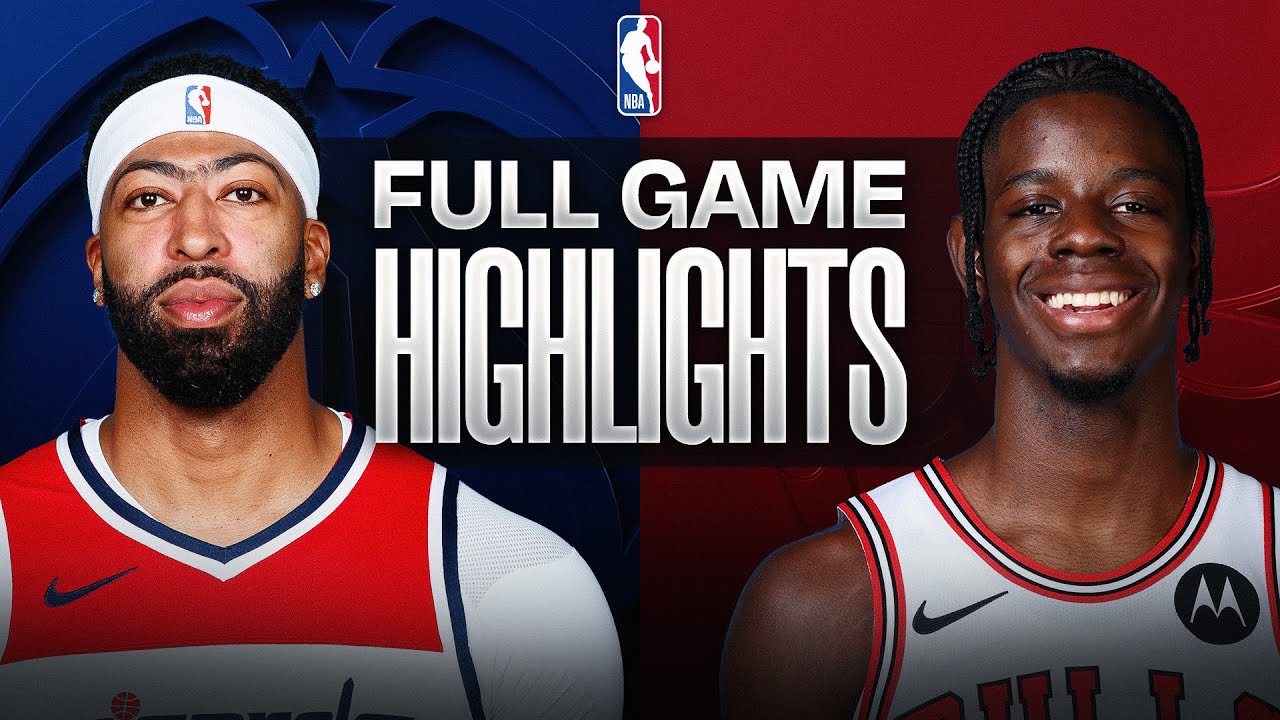
Washington got the response it needed in Chicago. It also got another reminder that a good stretch is not the same as a complete game. The Wizards beat the Bulls 124–120 at United Center on Saturday, October 24, improving to 2–1 after Friday’s loss to Toronto. A 40-point third quarter turned the game. A 38-point Chicago fourth quarter made the finish much harder than it needed to be.
The useful takeaway is not that Washington suddenly solved everything. It is that several of the specific problems from the Raptors loss improved, and the Wizards found enough production beyond their two biggest names to win on the second night of a back-to-back.
THE THIRD QUARTER CHANGED THE GAME
Washington trailed 62–57 at halftime, then outscored Chicago 40–20 in the third to enter the fourth ahead 97–82. That is a 20-point swing in one period. The NBA.com game account credits Trae Young with seven points and five assists in that quarter, including a late lob to Alex Sarr.
Young finished with 25 points and nine assists, made four threes and went 9-for-9 at the line. His value here was both creation and a reliable way to convert opportunities. When an offense can get a shot from the first advantage or the next pass, it gives the supporting players something useful to do instead of asking them to rescue a stalled possession.
Washington finished with 28 assists and 62 points in the paint. Those numbers do not identify every action that worked, but they support the bigger picture: this win involved more than waiting for a hot three-point night. The Wizards made only 10 of 33 from deep.
THE POSSESSION RESPONSE WAS REAL
Before the game, our preview set two practical targets: fewer than 15 total turnovers and fewer than 10 Chicago offensive rebounds. Washington met both. The official NBA summary records 13 player turnovers plus one team turnover, for 14 total; Chicago had nine offensive rebounds. Against Toronto, those numbers were 23 total giveaways and 19 opponent offensive rebounds.
That is meaningful progress, with an important limit: these are different opponents. One improved box score does not prove the same habits will hold against every type of pressure. It does show that the next discussion can be about repeating the response, rather than explaining another massive deficit in shot opportunities. Washington attempted 94 field goals to Chicago’s 93, a much healthier balance than Friday’s 79–101 gap. Shot attempts are not identical to possessions.
The turnovers still hurt when they happened. Chicago scored 22 points off Washington’s giveaways, while the Wizards scored eight off Chicago’s. Fewer mistakes is the right direction; preventing the most damaging ones remains part of the job.
KYSHAWN’S RESPONSE WENT BEYOND THE POINTS
Kyshawn George followed an eight-turnover night against Toronto with 22 points, nine rebounds, five assists and four blocks against Chicago. He committed three turnovers. He also went 0-for-5 from three, which makes the broader production more interesting: his impact did not require a good night from outside.
This is the version of development worth tracking. Can he make the simpler next read, contribute on the glass and remain useful when the jumper is not falling? Saturday gave fans evidence in those categories. It did not erase Friday or establish a finished product. The standard now is to bring those contributions into the next game without forcing every touch into a difficult scoring attempt.
CHAMPAGNIE GAVE THE WIN ITS FOUNDATION
Justin Champagnie’s 11 points, 14 rebounds and four assists in 26:13 deserve a prominent place in this recap. He collected 11 defensive rebounds and three offensive rebounds, and did not commit a turnover. After a game in which Toronto’s wings kept extending possessions, that kind of work mattered.
His plus-18 was Washington’s best individual plus-minus Saturday. It describes the score during his minutes; it does not prove he personally caused every good possession. The stronger case is the tangible contribution: secure the ball, help finish stops and keep the offense connected. Those are repeatable jobs even when the scoring distribution changes.
Tre Johnson added 13 points without a turnover. Bub Carrington made three threes and scored nine. Washington’s bench supplied 41 points to Chicago’s 28. There was enough support for the Wizards to win without an efficient Anthony Davis scoring night.
AD IMPROVED HIS OUTPUT; THE OFFENSE STILL HAS WORK TO DO
Davis finished with 19 points, six rebounds and four assists after scoring nine against Toronto. He attempted 21 shots and made eight. More attempts and more points are a response, but 8-for-21 is not an efficiency breakthrough.
The next question should stay specific: how often can Washington create a useful catch for Davis, with an available outlet when help comes? Sarr’s finishing and the passing around the action can help. Giving Davis the ball is a starting point; creating an advantage before the defense loads up is the more valuable goal. That is our tactical recommendation, not a report of the coaching staff’s instructions.
THE FOURTH QUARTER IS THE WARNING
Chicago won the final period 38–27 after Washington had led by as many as 21. Caleb Wilson finished with 30 points and 14 rebounds, and the Bulls stayed dangerous despite shooting 12-for-43 from three. Washington allowed 34 fast-break points for the game. These are reasons to examine transition matchups and the quality of late possessions rather than filing this away as a comfortable win.
A lead should not turn the offense into a wait for the clock to disappear. Get into the action early enough to reach a second option, maintain floor balance and avoid gifting a trailing team easy chances. Young’s perfect foul shooting helped Washington finish, but closing well should involve more than surviving the final trips to the line.
WHAT GOES TO CHARLOTTE
Keep the possession improvement, George’s broader contribution and Champagnie’s rebounding. Improve the transition defense and sustain organized offense for four quarters. Washington travels to Charlotte on Monday, October 26, at 7 p.m. Eastern, with both teams entering 2–1.
The Stats Lab now includes all three completed games: Milwaukee, Toronto and Chicago. Use the opponent filter to compare the response, and remember that three appearances are still a small sample. AJ Dybantsa missed Saturday with the ankle issue described in NBA.com’s game account; Monday availability needs a fresh official check.
SOURCE AND MEDIA NOTE
This is a box-score-led WizKids assessment using NBA.com’s final box score, game summary and official highlights. It does not claim a full possession-by-possession film study or locker-room reporting. The embedded video and NBA.com recap link both cover Saturday’s Wizards–Bulls game. The cover is the associated official NBA video artwork, not an original WizKids game photograph.